
Loading...
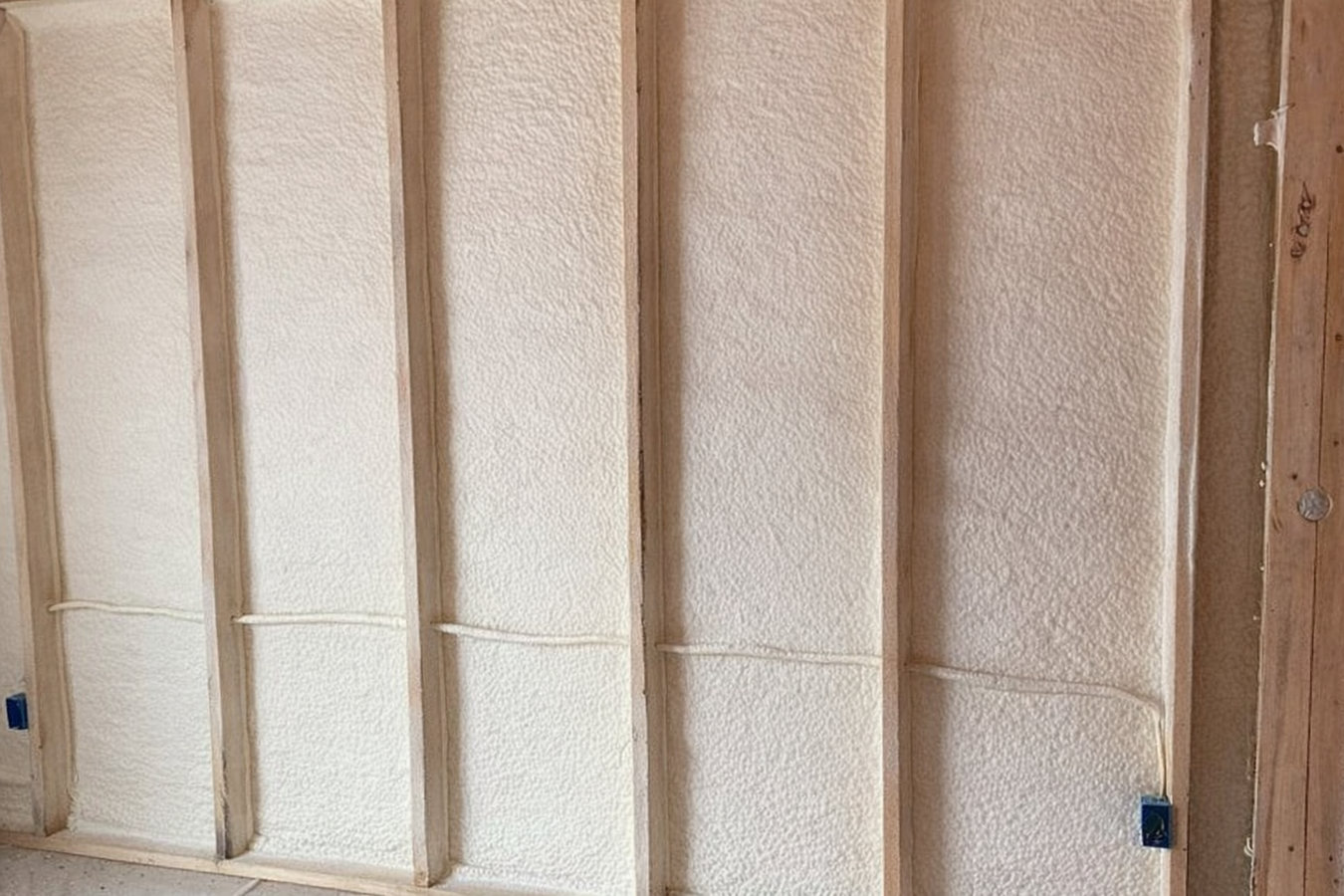
Closed-cell spray foam blocks heat, moisture, and agricultural dust in one application - the highest-performing insulation upgrade available for Central Valley homes.
Closed-cell foam insulation in Atwater is a two-part liquid sprayed onto walls, ceilings, and crawl spaces where it expands and hardens into a dense, airtight layer that insulates and seals at the same time, most jobs take one to two days and you will need to be out of the treated area for at least 24 hours after spraying.
Unlike traditional fiberglass batts, closed-cell foam has no gaps, no settling, and no sections that shift over time. It delivers some of the highest insulating performance per inch of any material available to homeowners. In Atwater, where summer temperatures can stay above 100 degrees Fahrenheit for weeks, that performance directly reduces how hard your air conditioner has to work. It also blocks moisture - useful in a region where foggy winters and irrigated farmland can push humidity into below-grade spaces and wall cavities.
Many homeowners pair closed-cell foam with spray foam insulation across multiple areas of their home for a complete, high-performance building envelope.
If your electricity bill jumps sharply from May through September and your air conditioner seems to run nonstop, your home is losing cool air faster than the system can replace it. In Atwater's triple-digit summers, a poorly insulated home fights a losing battle against the heat - and your monthly bill reflects it.
If west-facing rooms feel noticeably hotter than the rest of the house during afternoon hours, uneven or missing insulation is often the cause. This is common in older Atwater homes where insulation was applied inconsistently or has settled over decades. Closed-cell foam targets those specific problem areas.
Atwater's agricultural surroundings mean fine dust is a constant presence, especially during harvest months. If your HVAC filters clog faster than recommended and surfaces need wiping down every few days, outside air - and everything in it - is entering through gaps in your building envelope. Foam seals those gaps.
Hold your hand near an electrical outlet on an exterior wall during a cool morning. If you feel air moving, your wall cavity has gaps connecting the inside of your home to the outside. Those same gaps that let cold in during tule fog season let heat in all summer long.
We apply closed-cell foam to attic rafters and roof decks, crawl space walls and rim joists, exterior wall cavities, and basement perimeter walls. Each application area has different prep requirements, and we walk you through what is involved for your specific home before any work begins. For homeowners weighing their options, we also offer open-cell foam insulation - a softer, more breathable alternative that costs less per square foot and suits different applications.
All work meets California energy standards for Climate Zone 13. If your project requires a permit through the City of Atwater Building Division, we handle the application and coordinate inspections - that is not your job to figure out. The Spray Polyurethane Foam Alliance publishes quality guidelines for foam installation that inform how we approach every job.
Best for homeowners who want to condition their attic and stop heat from pouring through the roof into the living spaces below.
Suited to homes with moisture concerns in the crawl space or significant air leakage where the floor framing meets the foundation.
Ideal for older Atwater homes with little or nothing in the wall cavities - foam can be applied through small access holes with minimal disruption.
The right choice for below-grade spaces where you want insulation and moisture resistance in a single step.
A large share of Atwater's housing was built between the 1950s and 1980s - before modern insulation standards existed. Many of these homes have little or nothing in their exterior walls, and whatever is in the attic may have settled or degraded over decades. Closed-cell foam is one of the most effective ways to correct that gap. Its high insulating value per inch means a thinner layer does more work than a thick layer of traditional insulation, which matters in tight wall cavities and shallow attic spaces. The foam also adds slight structural stiffness to walls once cured, which is a secondary benefit worth knowing about.
The Central Valley's tule fog season runs from late November through February, keeping moisture levels high for months at a time. Closed-cell foam's moisture-blocking properties make it particularly well-suited to this pattern - it protects wall cavities and crawl spaces from the condensation that accumulates during long foggy stretches. Homeowners in Turlock and Modesto face the same combination of extreme summer heat and damp winters, and we serve both communities regularly.
We ask basic questions about your home and the areas you want treated. We reply within one business day and schedule an in-person walkthrough. No price is given over the phone.
We measure the areas, check existing insulation conditions, and look for any obstacles like wiring or ductwork. You receive a written, itemized estimate that covers materials, labor, and whether a permit is needed.
We tell you exactly what to move or cover. Most importantly, arrange for yourself, your family, and pets to be out of the treated area on installation day and for at least 24 hours after spraying - your contractor gives you a specific re-entry time.
The crew sets up protective coverings, sprays the foam, and cleans up before leaving. Once the re-entry window passes, we do a final walkthrough so you can see the completed coverage and confirm there are no gaps or thin spots.
Written quote. No obligation. We reply within one business day.
(209) 582-0618We install closed-cell foam to current California energy code and document what goes where. You get a written estimate before any work begins and a walk-through of the finished job, so you can see exactly what the install included.
Spray foam application requires specific training on the equipment and the particular foam system being used. We do not send untrained applicators to jobs. The crew doing the work knows the system they are installing, which is the difference between foam that bonds properly and foam that peels or shows thin spots.
Before every spray foam job we give you a written re-entry time and explain exactly what ventilation steps the crew will take before leaving. You will not be left guessing when it is safe to go back in. That clarity is a basic standard we hold ourselves to on every job.
Mid-century Atwater homes built before modern insulation standards are our most common projects. We know how to work around older wiring and framing, how to apply foam through small access holes in existing walls, and how to leave the space looking clean when we are done.
We combine expert application, local knowledge of Atwater conditions, and a transparent process that puts you in control of every decision. No verbal estimates, no surprises on installation day.
The U.S. Environmental Protection Agency publishes guidance on spray polyurethane foam safety and re-entry best practices that is worth reading before your installation day.
A lower-cost spray foam alternative that suits interior walls and attics where moisture resistance is less critical.
Learn MoreOur full spray foam service covers attics, walls, crawl spaces, and more - find out which foam type fits your project.
Learn MoreAtwater's cooling season starts early - call today or submit a request and we will get you a written estimate within one business day.