Loading...
Ground moisture under your home causes soft floors, musty smells, and higher heating bills - often without any visible warning. We install vapor barriers that seal it out and protect your home's structure for years.
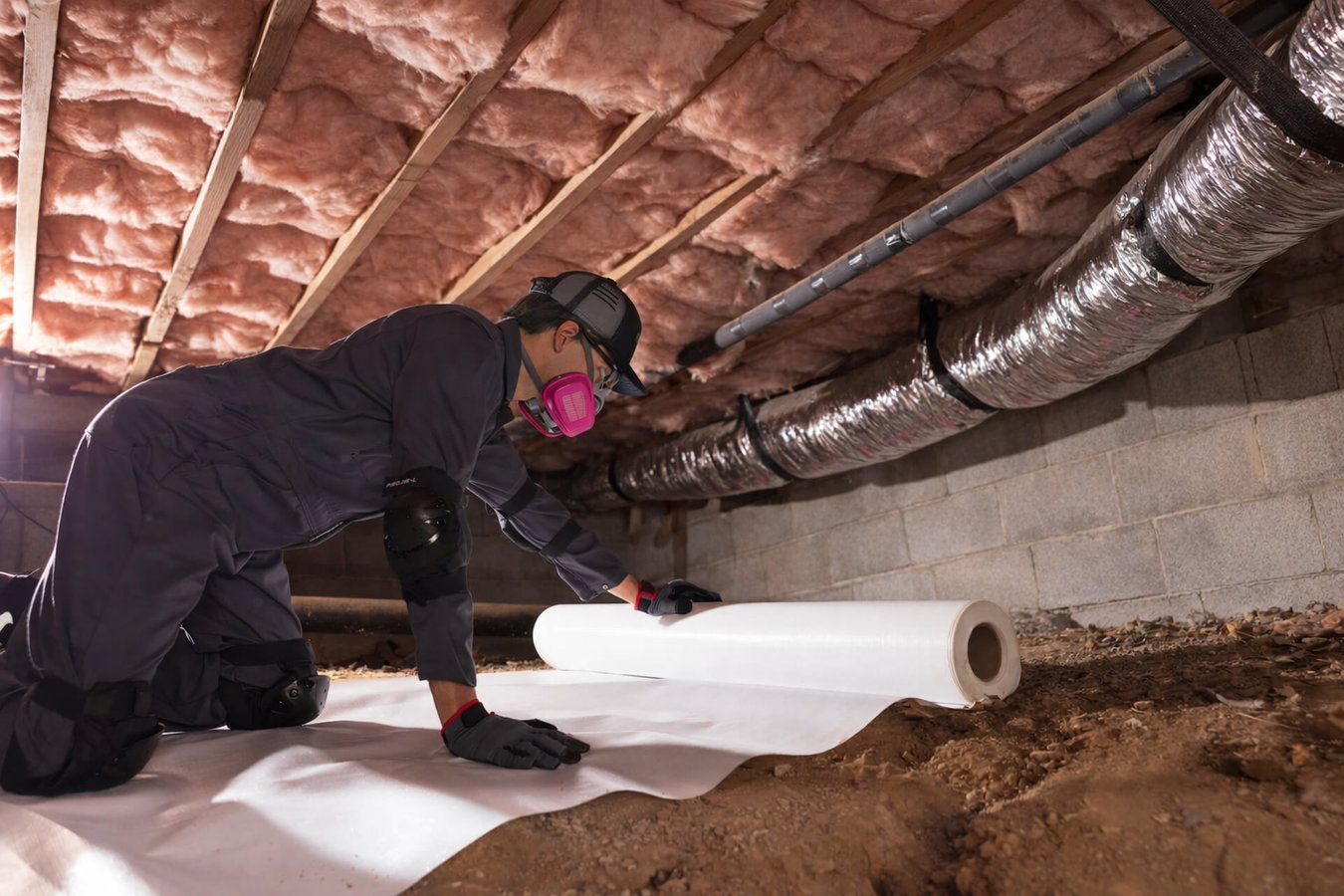
Vapor barrier installation in Atwater means laying heavy-gauge plastic sheeting across the bare dirt floor of your crawl space, sealing every seam, and securing the edges to the foundation walls to create a continuous moisture seal - most jobs are completed in a single day with no disruption to your living areas.
In a Central Valley home, the crawl space sits directly above clay-heavy soil that holds winter rainfall for weeks after the rain stops. Without a sealed barrier, that moisture evaporates upward into your floor joists, insulation, and eventually your living space. A properly installed vapor barrier removes that path entirely. It also pairs well with crawl space vapor barrier services that address the full perimeter of the space, and with attic air sealing to close off moisture and air pathways from top to bottom.
Older homes across Atwater - particularly those built in the 1950s through 1970s - were rarely constructed with any meaningful crawl space moisture protection. A straightforward installation now is far less costly than structural wood repairs down the road.
If you walk across a room and the floor gives a little more than it used to, or you notice a subtle bounce in spots that used to feel solid, moisture may have been working on the wood framing beneath your feet. In Atwater homes built in the 1950s through 1970s, this kind of floor movement is often the first visible sign that the crawl space has been wet for a long time.
A persistent musty odor that seems worse during Atwater's tule fog season or after winter rains is often coming from mold or mildew growing in a damp crawl space. The smell travels up through gaps in your flooring and into your living space. If it fades in summer and returns each winter, that seasonal pattern is a strong clue that ground moisture is the source.
If you have ever shone a flashlight into your crawl space and noticed water droplets on pipes, or dark staining on the wooden beams, that is moisture doing damage in real time. Bare dirt floors in crawl spaces release water vapor constantly, and without a barrier, that vapor has nowhere to go except up into your home's structure.
If you know you have a vapor barrier but it was installed a long time ago, it may have degraded, shifted, or been damaged by pests or a previous contractor working in the space. A barrier with holes or gaps is only slightly better than no barrier at all - ground moisture finds weak spots quickly and works its way through.
We install heavy-gauge polyethylene sheeting across the full crawl space floor, with seams overlapped generously and sealed with tape so there are no gaps for moisture to sneak through. For homes where the entire perimeter needs coverage, we extend the barrier up the foundation walls. If the existing barrier is torn or degraded, we remove it first rather than installing over material that has already failed. Our crawl space vapor barrier service covers the standard floor and lower-wall installation that works for most Atwater homes.
Every installation begins with a walkthrough of the crawl space. We check the current condition, measure the coverage area, and look for any drainage or standing water issues that need to be resolved before the barrier goes in. We do not install over a problem - we tell you about it first. All work meets California residential moisture control standards.
For homes with bare dirt crawl space floors and no existing protection - the most common situation in Atwater's older neighborhoods.
For homes where degraded, torn, or inadequate sheeting is already in place and needs to come out before new material can go in.
For homes with higher moisture pressure, coverage extends up the foundation walls to create a full perimeter seal against ground moisture.
For homeowners who want an independent evaluation of crawl space conditions before committing to any installation work.
Atwater sits in the San Joaquin Valley, where hot, dry summers are followed by wet winters with tule fog and steady rain. That seasonal shift - baking dry in July and damp through January and February - means the soil under homes here goes through repeated moisture cycles every year. The clay-heavy valley floor soils that are common in Merced County absorb water slowly and release it slowly, which means ground moisture stays elevated under your home well into spring even after the rains stop. California's Title 24 building energy standards set requirements for moisture control in new construction, and a reputable contractor will install your barrier in a way that aligns with those standards.
The housing stock in Atwater skews older - much of it was built in the 1950s through 1980s when crawl space moisture protection was minimal or nonexistent. Homeowners in Gustine and Patterson face the same conditions, and we serve both communities. If your home falls in that age range and has never had a vapor barrier inspection, scheduling a free walkthrough is the right first step - it costs nothing and takes less than an hour.
We ask a few basic questions - the age of your home, whether you have noticed any moisture signs, and whether you know if a vapor barrier is already in place. We reply within one business day and schedule a free on-site visit. No price is quoted until we have seen the crawl space.
We access the crawl space through the floor or exterior hatch and spend 20 to 40 minutes checking what is there. We look at soil conditions, existing barrier status, frame condition, and access difficulty. You get a written estimate before any work is scheduled.
You do not need to do much to prepare. Make sure the crawl space hatch is easy to open and let the crew know about any pets or children near the work area. If drainage issues were found during the assessment, those need to be resolved first - we will advise you on that.
The crew lays the barrier flat across the entire floor, overlaps and tapes all seams, and tucks the edges against the foundation walls. Most jobs finish in one day. Before we leave, we show you photos from inside the crawl space and walk through what was installed.
Free estimate. Written quote. No obligation. We reply within one business day.
(209) 582-0618We do not quote crawl space work over the phone. Every job starts with an in-person assessment and a written estimate so you know the scope and cost before you commit - which matters for any work on your home's structure.
Crawl space work is invisible once the hatch closes. We photograph the space before and after every job and walk you through the results before we leave. That documentation stays with you - it is useful if you ever need to show a buyer, inspector, or insurance company what is under your home.
We have worked on homes throughout Merced County and understand the clay soils, tule fog moisture cycles, and older housing stock that are common here. That local experience informs how we assess each crawl space and what we recommend - not a generic approach copied from somewhere else.
We use heavy-gauge barrier material and tell you exactly what thickness we are installing before the job starts. The EPA links crawl space moisture to indoor air quality - that connection is part of why we do not cut corners on material weight. Thicker material lasts longer and holds up when a plumber or pest control crew crawls through later.
The common thread across all of our proof points is transparency - we show you what we did, explain why we did it, and give you documentation you can hold onto. That is how we build trust for work that happens in a part of your home you cannot see.
The U.S. Environmental Protection Agency connects crawl space moisture to indoor air quality and mold risk. The U.S. Department of Energy identifies moisture control as a foundational step in home energy efficiency.
Air sealing services for your attic that complement crawl space moisture work by closing off the top of your home's envelope.
Learn MoreStandard crawl space vapor barrier installation covering the floor and lower foundation walls - the most common starting point for Atwater homes.
Learn MoreAtwater's wet season creates the highest moisture pressure under your home - schedule your free estimate now and get protected before it arrives.