Loading...
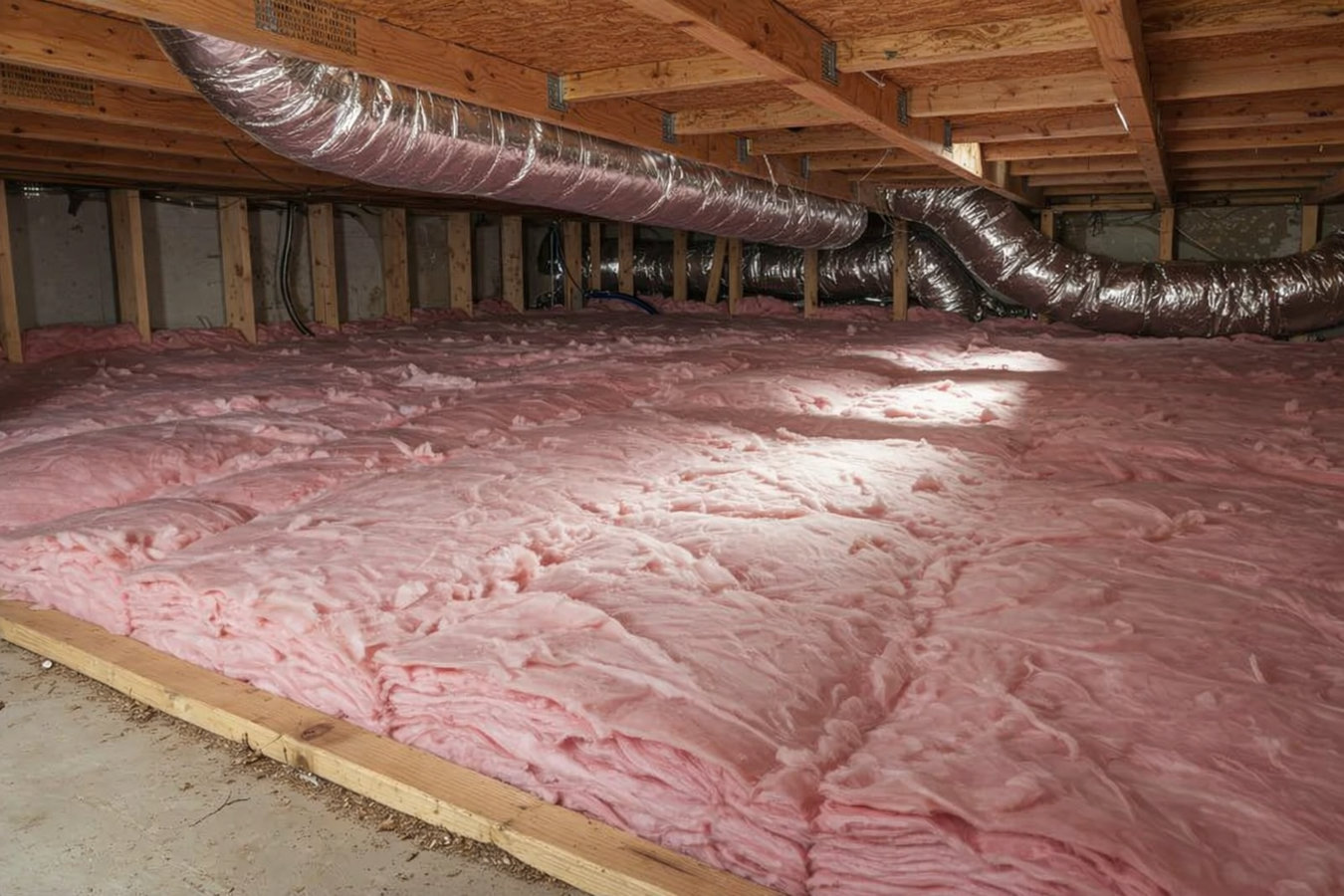
An uninsulated crawl space lets Atwater's extreme heat and cold straight into your home. We seal and insulate it so your floors stay comfortable and your energy bills reflect it.
Crawl space insulation in Atwater acts as a thermal blanket between the ground below your home and the floors you walk on every day, reducing heat in summer and cold in winter - most jobs take one to two days for a standard single-family home.
Without insulation in the crawl space, outside temperatures bleed directly into your living area. In Atwater, where summers routinely push past 100 degrees and winter nights drop into the low 30s, that means your heating and cooling system is fighting the ground beneath your feet all year long. If your floors feel uncomfortably cold in winter or warm in summer despite running your HVAC, the crawl space is often the reason. Many homeowners also notice musty odors that drift up from below during the Central Valley's tule fog season - a sign that moisture is moving through an unprotected crawl space.
If the existing material in your crawl space needs to come out first, we handle that too - you can learn more about how we approach that step on our insulation removal page. Once the space is clear and properly insulated, a crawl space vapor barrier is often the next logical step to keep ground moisture from undermining the new insulation.
If your kitchen or living room floor feels noticeably cold through your socks on January mornings even after the heat has been running, cold air from the crawl space is moving up through the floor. Atwater winters bring regular nighttime temperatures in the low 30s, and an uninsulated crawl space lets that cold in without resistance.
A damp, earthy odor that drifts into your home during the foggy months - typically November through March - often comes from below. The Central Valley's tule fog brings sustained ground-level moisture, and an unsealed crawl space absorbs it. That smell signals moisture is building in a space where it can cause real structural damage over time.
Atwater summers regularly push past 100 degrees. If your cooling system runs all day but the ground floor still feels warm, heat may be radiating up from the crawl space. An insulated crawl space buffers your living area from the hot ground beneath, and without it your air conditioner is fighting that heat directly.
If you look into your crawl space with a flashlight and see insulation that is hanging down, bunched up, stained dark, or absent in sections, it is no longer doing its job. This is especially common in Atwater homes built before 1980, where original insulation - if it was ever installed - may be decades past its useful life.
The two main approaches to crawl space insulation serve different situations, and we help you choose the right one after seeing your space in person. Floor joist insulation fits insulation between the wooden beams under your floor - a solid, cost-effective approach for dry spaces with good natural ventilation. Full encapsulation goes further: a heavy polyethylene liner seals the floor and walls of the crawl space, turning it into a semi-conditioned environment that stays dry and easier to maintain year-round. For Atwater homes with a history of moisture, musty smells, or tule fog damage, encapsulation is often the right call.
We also pair crawl space work with crawl space vapor barrier installation when ground moisture is a factor, and we connect customers who need additional air sealing to our wall insulation service when the thermal envelope needs attention beyond just the crawl space. Moisture problems must be resolved before any new insulation goes in - we flag and address those issues during the assessment rather than insulating over them.
Best for dry crawl spaces with solid ventilation - insulation is fitted between the wooden beams under your floor.
Seals the entire crawl space with a heavy vapor liner and wall insulation - the right choice when moisture is a recurring issue.
A stand-alone or combined ground cover that blocks moisture from the soil before it enters the crawl space air.
Atwater sits in the heart of the San Joaquin Valley, where the temperature swings between summer and winter are wide enough to make an uninsulated crawl space a problem in both directions. Summer temperatures climb well above 100 degrees, and winter nights regularly drop into the low 30s - a range that most other California climates never see. A properly insulated crawl space pays off all year, not just in one season. A large share of Atwater's homes were built in the mid-20th century, often with original crawl spaces that have never been updated - meaning many still have no vapor barrier, outdated venting, or insulation that has been degrading for decades. Homeowners in Hilmar-Irwin and nearby communities face the same combination of older housing and Valley climate extremes.
The Central Valley's tule fog season - running from late fall through early spring - brings sustained ground-level moisture to the Atwater area for months at a time. That humidity works its way into unprotected crawl spaces, softening wood, feeding mold, and degrading insulation that was not installed with a proper ground barrier. Atwater is also surrounded by active farmland, which drives higher-than-average rodent pressure on crawl spaces. Mice and other pests can destroy a significant portion of crawl space insulation in a single season. Homeowners in Merced and across Merced County deal with the same agricultural pest pressure. The U.S. Department of Energy's resources on crawl space insulation outline why sealing and insulating this space is one of the higher-value energy upgrades for homes in hot, dry climates like ours.
We schedule a time to come out and look at your crawl space in person - typically within a few days. Estimates are free, and the visit takes 30 to 60 minutes. You do not need to prepare anything special; just be home to hear what we find.
We access your crawl space and check the size of the space, condition of any existing insulation, moisture or pest damage, and what the floor joists and foundation walls look like. We explain what we find in plain language. We reply to all requests within one business day.
You receive a written estimate breaking down labor and materials. If the project requires a permit - common for California insulation work tied to energy upgrades - we handle pulling it from the City of Atwater Building Division on your behalf.
Most jobs are done in a single day. Before we leave, we show you photos of the finished work inside the crawl space so you can see what was done without having to crawl in yourself. If a permit was pulled, a city inspector will schedule a follow-up - we coordinate that for you.
We come out, take a look, and give you a written quote you can compare. No obligation to move forward, and we reply within one business day.
(209) 582-0618A large share of Atwater's housing stock went up between the 1950s and 1970s, often with little or no original crawl space insulation. We know what to look for in homes of that era - deteriorated vapor barriers, outdated venting, and moisture that has been building for years - and we address it before the new insulation goes in.
Atwater's annual tule fog season brings sustained ground-level humidity that works directly into unprotected crawl spaces. We install proper vapor barriers alongside insulation so that moisture pathway is closed, not just covered. The National Weather Service documents the tule fog patterns that make this a year-round concern in the Central Valley.
National Weather Service - HanfordAtwater's proximity to agricultural fields means rodent pressure on crawl spaces is higher than in urban settings. We discuss pest-resistant installation approaches during every estimate and make sure any existing pest damage is addressed before new material goes in.
We pull required permits through the City of Atwater and coordinate the inspection so a city inspector signs off that the work meets California's energy standards. That documentation protects you now and when you sell.
We bring local knowledge of Atwater's climate, housing stock, and pest conditions to every crawl space job. The result is installation that holds up through tule fog season, summer heat, and the rodent pressure that comes with living near agricultural land.
Tackle heat and cold coming through exterior walls alongside your crawl space work for a complete thermal envelope.
Learn MoreA ground-level moisture barrier works alongside crawl space insulation to keep humidity from entering the space.
Learn MoreSummer heat is coming - get your crawl space sealed before your energy bills climb. Call us or request a free estimate online.