
Loading...
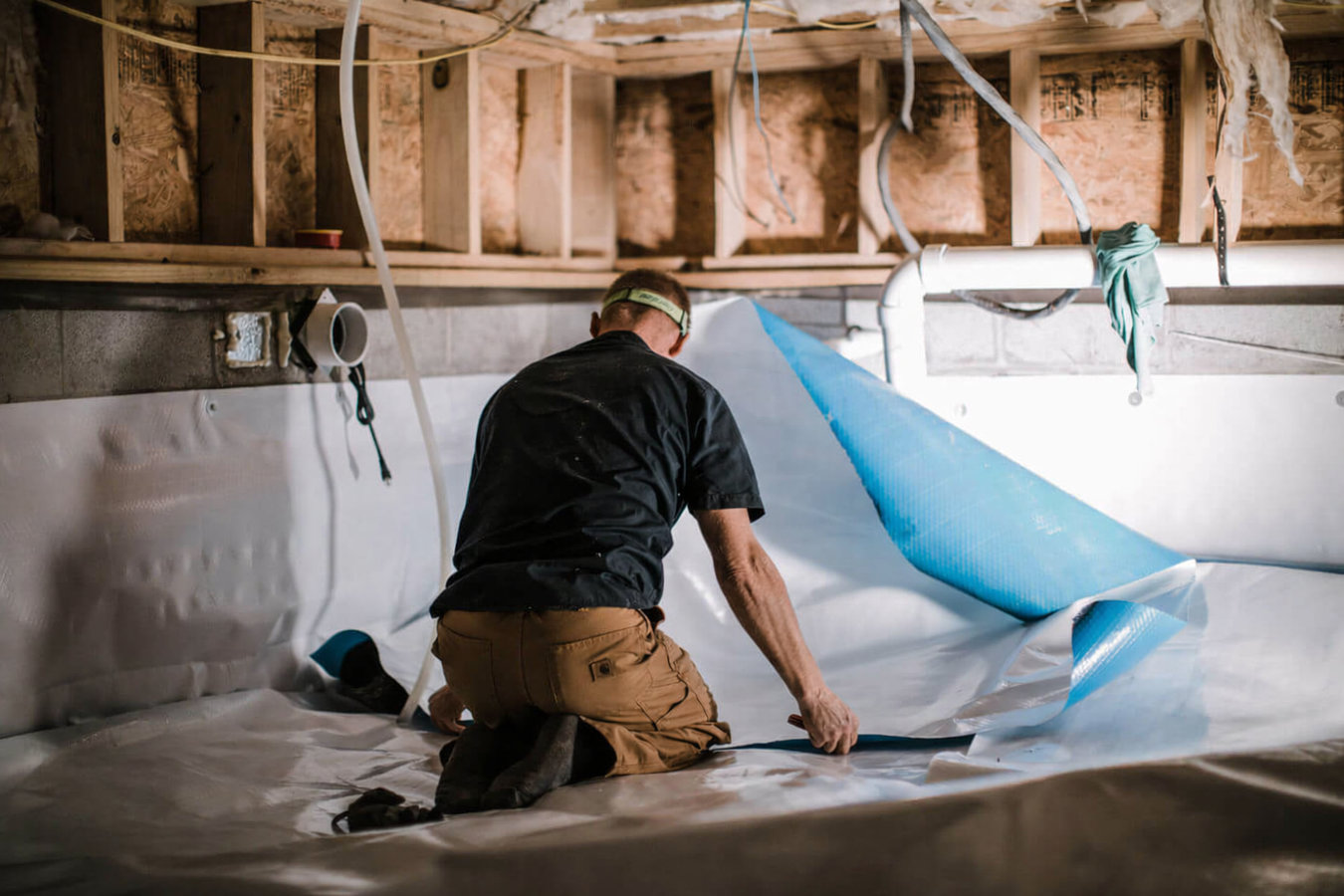
Unprotected crawl spaces let ground moisture work silently on your floors and framing every winter. We seal it out with a properly installed vapor barrier so your home stays dry year-round.
A crawl space vapor barrier in Atwater is a heavy sheet of plastic laid across the bare dirt floor under your home, sealing ground moisture out before it can rise into your floor joists and framing - most jobs are completed in one to two days with no need to leave your home.
The San Joaquin Valley's clay-heavy soils absorb winter rainfall and release moisture upward for weeks after the rain stops. Without a sealed barrier between that ground and your home's structure, the damage is slow and invisible - until it shows up as soft floors, musty odors, or rotting wood that nobody noticed until it was already expensive. A vapor barrier in Atwater also works best alongside proper crawl space insulation to address both moisture and heat loss at the same time.
Many homes in Atwater were built before this kind of protection was standard practice. If your home was built before the 1980s and has never had the crawl space inspected, there is a real chance the situation underneath is worse than you would expect.
If your home develops a damp, earthy odor during Atwater's tule fog season or after a stretch of winter rain, that smell is often coming from below. Moisture rising through an unprotected crawl space carries that odor up through your floors into your living space. It is one of the earliest and most reliable signs that the crawl space needs attention.
Wood floor joists that have been exposed to sustained ground moisture start to soften and lose their rigidity. If you notice areas of your floor that feel slightly bouncy or creak more than they used to, that can be a sign of moisture damage working its way up from below. This is especially common in older Atwater homes where no vapor barrier was ever installed.
If you have ever peeked into your crawl space and noticed water droplets on pipes, metal straps, or the underside of the floor, that is a direct sign of excess moisture in the space. Condensation like this means the air under your home is humid enough to deposit water on cool surfaces - and that same moisture is also affecting your wood and insulation.
Many mid-century homes in Atwater were built with little or no moisture protection under the floor. If you have owned your home for years and no one has ever looked at the crawl space, there is a real chance the situation down there is worse than you would expect. A quick inspection is the only way to know for sure, and it costs nothing to ask a contractor to take a look.
We install heavy-gauge polyethylene sheeting across the entire crawl space floor, with seams overlapped and sealed and edges secured to the foundation walls. The goal is a continuous, unbroken surface with no gaps where moisture can pass through. For homes with more serious moisture concerns, we also offer full vapor barrier installation that extends coverage up the foundation walls and can include additional moisture mitigation steps before the barrier goes in.
Every project starts with a walkthrough. We enter the crawl space, check the current condition, measure the space, and tell you honestly what it needs before we quote anything. We do not recommend encapsulation or extra services unless your situation actually calls for them. All work meets California building standards for residential moisture control.
Suited for most Atwater homes - heavy plastic sheeting across the entire dirt floor, sealed at seams and secured to foundation walls.
Ideal for homes where old, torn, or degraded sheeting is in place and needs to come out before a new barrier can go in.
For homes where moisture pressure is higher, coverage runs up the foundation walls several inches to create a full perimeter seal.
For homeowners who want an honest evaluation of what is under their house before committing to any work - no obligation.
Atwater sits in Merced County in the heart of the San Joaquin Valley, where summer temperatures regularly top 100 degrees Fahrenheit and winters bring tule fog, rain, and saturated ground. That seasonal swing - bone dry in July, damp and cold in January - means the soil under homes here goes through repeated moisture cycles every year. The clay-heavy valley floor soils hold water long after rain events and release it slowly upward for weeks, which keeps moisture pressure against crawl space floors higher and longer than many homeowners realize. A vapor barrier is what stops that ongoing pressure from working on your home's structure.
Much of Atwater's housing stock was built between the 1950s and 1980s, when crawl space moisture protection was minimal or nonexistent. Homeowners in Winton and Hilmar-Irwin face the same conditions and the same older housing stock, and we serve both communities regularly. If your home is from that era and has never had the crawl space inspected, scheduling a free assessment is the most practical first step you can take.
We ask a few basic questions - home size, whether you have noticed any moisture signs, and whether anyone has been in the crawl space recently. We reply within one business day and schedule a free on-site visit. No price is given over the phone without seeing the space first.
We access the crawl space, inspect what is there, check moisture levels, and measure the coverage area. You get a written estimate that explains the scope and cost before any work is scheduled. This visit is free with no obligation to move forward.
You do not need to do much to prepare. Make sure the crawl space access hatch is clear and easy to open. The crew brings all materials and equipment. If any drainage issues need to be resolved first, we advise you on that before installation day.
Most jobs are completed in a single day. We remove old or damaged sheeting, lay the new barrier across the entire floor, seal all seams, and secure the edges. Before we leave, we walk you through the work - including photos from inside the crawl space.
Free estimate. Written quote. No obligation. We reply within one business day.
(209) 582-0618Our crews have sealed crawl spaces across Merced County for years and know the moisture conditions that come with the local ground. We document what we install and where, so you can see exactly how the space was treated before we leave.
Crawl spaces are out of sight and easy to cut corners on. We document every installation with before-and-after photos and walk you through the results before we leave. You get a clear record of what was installed and where - something you can share with a future buyer or inspector.
We work in homes throughout the Central Valley and understand what the clay-heavy valley floor soils do to crawl spaces over time. That local experience shapes how we approach moisture assessment and barrier installation - we are not guessing about conditions we have never seen.
We use heavy-gauge barrier material that holds up against foot traffic, pests, and Central Valley temperature swings. Thin plastic installed quickly looks the same at first but fails within a few years. We will tell you exactly what material we are using and why before the job starts. The{' '}U.S. Department of Energy recommends at least 6-mil polyethylene sheeting for crawl space vapor barriers - we meet or exceed that standard.
Every proof point above comes back to the same thing: we do work you can verify and explain work you can understand. That matters most when the job is in a part of your home you cannot easily see yourself.
For more on moisture control standards, see guidance from the U.S. Department of Energy and the U.S. Environmental Protection Agency. California permit requirements are administered by the California Department of Housing and Community Development.
Full vapor barrier installation extending coverage to foundation walls for homes with more persistent or severe moisture concerns.
Learn MoreInsulation for the crawl space that pairs with a vapor barrier to address both moisture and heat loss from below your home.
Learn MoreGround moisture is most damaging during Atwater's wet winter months - schedule your free crawl space assessment now and get ahead of it.