Loading...
Atwater's summer heat puts commercial buildings under real pressure. If your HVAC system runs constantly and your energy bills still climb, the building envelope - not the equipment - is usually the problem. We install commercial insulation that helps your building hold its temperature and your costs stay manageable.
Commercial insulation in Atwater means installing the right material in the right locations - attic spaces, wall cavities, above drop ceilings, or around mechanical systems - so your building holds its temperature and your HVAC equipment isn't fighting a losing battle. Most straightforward jobs on a warehouse or small office building finish in one to three days, though larger or older buildings can take longer.
Many commercial buildings in Atwater and the surrounding Merced County area were built in the 1960s through 1980s, before modern energy efficiency standards existed. If your building is in that range and has never had insulation work done, there is a good chance it is costing you significantly more to heat and cool than it needs to. For homeowners curious about the same issue at a residential scale, crawl space vapor barrier installation is often a related first step in sealing an older building's lower envelope.
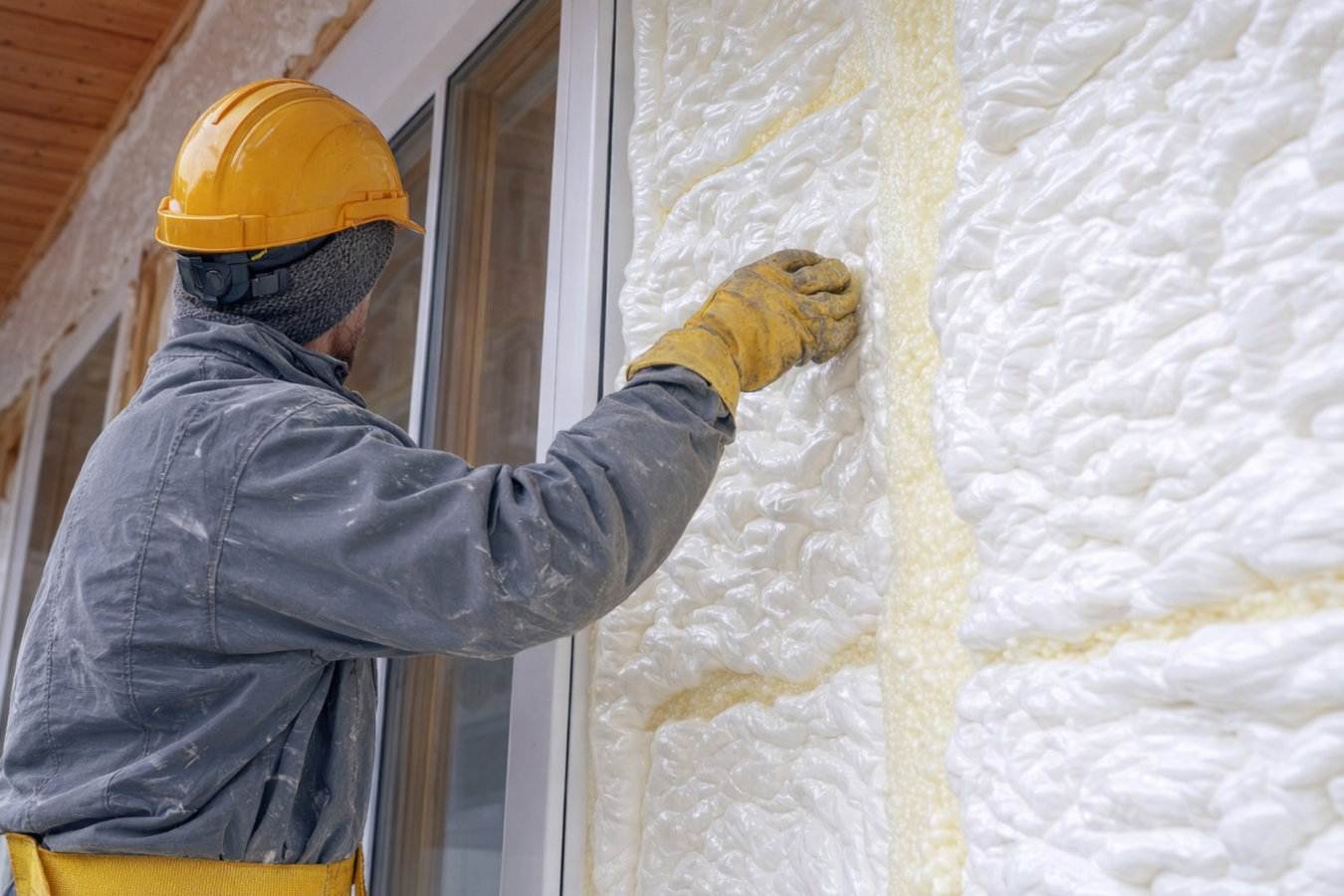
For commercial spaces where spray foam is the right fit, spray foam insulation handles both insulation and air sealing in a single application - a major advantage in hard-to-access areas above drop ceilings or in older masonry walls.
If your July and August utility bills feel out of proportion to what you are actually using, poor insulation is one of the most common causes. In Atwater's climate, a well-insulated building should maintain a comfortable temperature without the HVAC running constantly. When the system never seems to catch up on a 105-degree afternoon, that is a signal worth investigating.
If one section of your building is noticeably hotter or stuffier than the rest - even with the air conditioning running - insulation is likely missing or has failed in that zone. Uneven temperatures across a building are a clear sign that heat is getting in somewhere it should not be. This is common in older Atwater buildings where insulation was installed unevenly or not at all.
Commercial buildings built before the mid-1980s in the Central Valley were often constructed with minimal insulation. Energy costs were lower then, and efficiency standards were far less strict. If you have owned or leased the building for years and no one has assessed the insulation, there is a reasonable chance it is underperforming or has degraded significantly.
Atwater's agricultural surroundings mean fine dust is a constant presence, and if it accumulates inside faster than seems normal, air is getting in through gaps in the building envelope. Those same gaps let heat in during summer and cold air in during winter. Insulation and air sealing work together - one without the other leaves the job incomplete.
We install spray foam, blown-in, and rigid foam board insulation in commercial buildings of all sizes across Atwater and the wider Merced County area. The material that makes sense depends on your building's construction, the spaces that need coverage, and your budget. For buildings that need moisture management alongside insulation, crawl space vapor barrier installation is often done at the same time to address both problems in a single project.
For commercial spaces where a single application needs to handle both insulation and air sealing, spray foam insulation is typically the most efficient choice. It bonds directly to concrete, metal, wood, and other common commercial building materials and remains stable across decades of Atwater's temperature cycles.
Best for hard-to-reach areas, metal buildings, and older structures where a single application needs to handle both insulation and air sealing.
A cost-effective choice for warehouses and commercial buildings with large open attic cavities where coverage area is the primary concern.
Suited to walls and roofline applications where a high R-value per inch is needed and the space allows for panel installation.
Atwater sits in the heart of California's San Joaquin Valley, where summer temperatures regularly climb above 100 degrees for weeks at a time. That kind of sustained heat puts enormous pressure on any commercial building's cooling system, and poorly insulated buildings can see energy costs spike dramatically from June through September. Getting insulation right here is not just about comfort - it is about keeping operating costs manageable during the hottest months of the year. Business owners in Turlock and Modesto face the same conditions and the same calculations.
Atwater and the surrounding area also have a significant number of commercial buildings constructed in the 1960s through 1980s, many of which were built before modern energy efficiency standards existed. California's building energy code - known as Title 24 - sets specific minimum insulation requirements for commercial buildings undergoing renovation or new construction. These rules are enforced locally, and non-compliant work can result in failed inspections. The California Energy Commission publishes the full Title 24 standards, and the North American Insulation Manufacturers Association maintains installation guidelines that experienced contractors follow to meet code.
We gather basic information about your building - size, age, and what areas you want addressed. Most business owners hear back within one business day, and we can typically schedule a building walkthrough within a few days.
We walk your building, look at existing insulation, check for air gaps, and assess hard-to-reach areas. Within a few days you receive a written estimate breaking down the scope, materials, and total cost. If a permit is required, we note that upfront.
For projects that require a permit, we handle the application with the City of Atwater Building Division on your behalf. In a smaller city like Atwater, straightforward projects often move through the approval process in one to two weeks.
Our crew installs the insulation with minimal disruption to your daily operations. Before any walls are closed up, we walk through the finished work with you. If a permit was pulled, we coordinate the inspector visit - you don't have to manage that yourself.
Free on-site estimates, no obligation. We reply within one business day.
(209) 582-0618We have worked on commercial buildings across Atwater and the wider Merced County area - warehouses, offices, and mixed-use properties. We understand the local building stock, the common failure points in older construction, and what materials hold up in the Central Valley's climate over the long term.
We have insulated commercial buildings across Atwater and the Central Valley for years. We document what goes where and stand behind the results, so you know exactly what the job included and who is accountable if anything needs attention.
We manage the permit application, coordinate with the City of Atwater Building Division, and schedule the inspection. When the job is done, you have documentation confirming the work meets California's energy standards - useful for insurance, resale, or lease negotiations.
We walk your building before anything is agreed. If we find that the original insulation is still serviceable in certain zones, we will tell you. If we find something that needs to be removed first, we will explain why and what it adds to the project. No surprises, no padding the scope.
Commercial insulation is a long-term investment in your building's operating costs and value. We make sure you understand what you are getting before work starts - and we back it up with expert, permit-documented installation that holds up to scrutiny.
Moisture control for the underside of commercial and residential buildings, often installed alongside insulation in older Atwater properties.
Learn MoreThe spray-applied option that handles both insulation and air sealing in one step - ideal for commercial spaces with hard-to-reach cavities.
Learn MoreCall us today for a free on-site building assessment. The sooner you act, the sooner your energy costs reflect what your building actually uses.